
Description
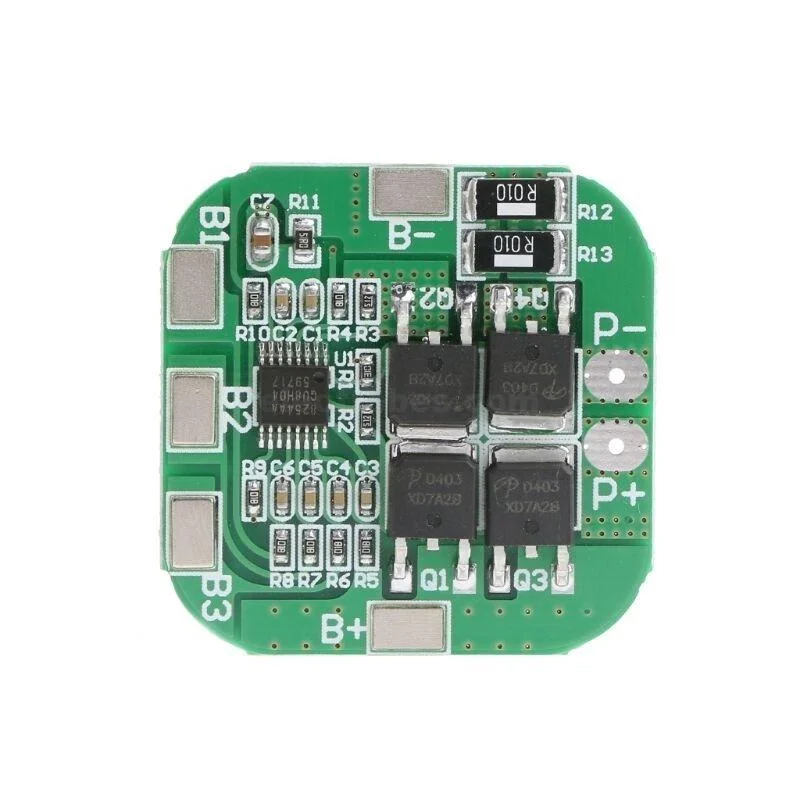
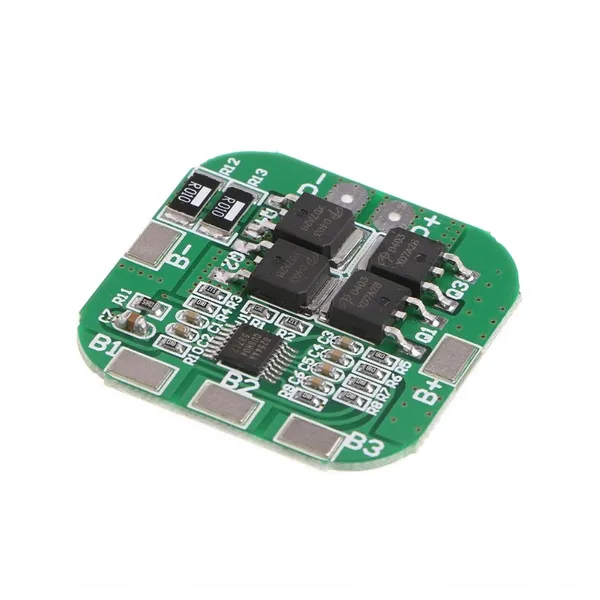
The 4S 20A 14.8V Li-Ion BMS Protection Board is a compact battery management and protection module designed for 4-cell series lithium-ion battery packs. It is suitable for battery packs made from 18650 and other compatible Li-ion cells.
This BMS helps protect a 4S battery pack from overcharging, over-discharging, excessive current and short-circuit conditions. Its compact PCB design and simple wiring make it useful for DIY rechargeable battery packs, backup power systems, LED lighting and other electronics projects.
The board is based on the S-8254AA controller and supports a 16.8V–17V charging voltage according to the supplied specifications.
Key Features
- Designed for 4S Li-ion battery packs
- Suitable for 18650 lithium-ion cells
- 14.8V nominal battery-pack configuration
- 16.8V–17V charging voltage
- 10A maximum working current
- 20A maximum instantaneous/peak current
- Overcharge protection
- Over-discharge protection
- Short-circuit protection
- Charge recovery function
- Low static current consumption
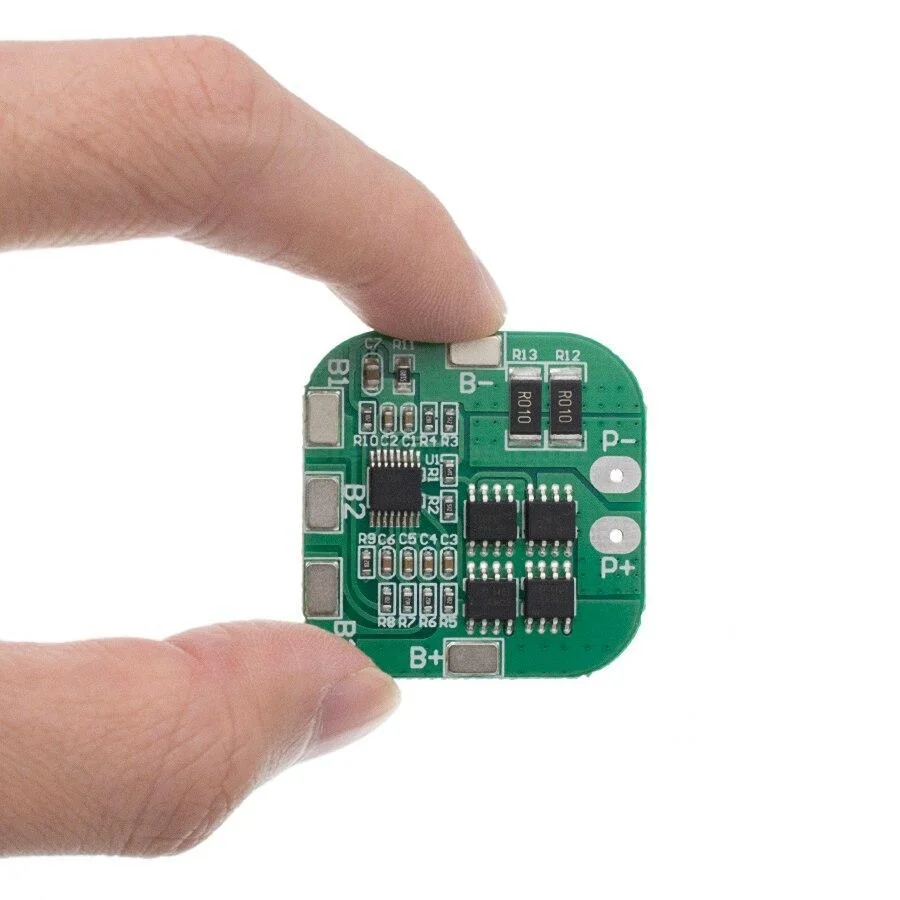
- Compact 35 × 35mm PCB
- Simple wiring and installation
- Suitable for DIY battery-pack applications
- S-8254AA protection controller
4S 18650 Battery Configuration
A 4S battery pack contains four Li-ion cells or four parallel cell groups connected in series.
| Configuration | Approx. Voltage |
|---|---|
| 1 Li-ion cell | 3.6V–3.7V nominal |
| 2S | 7.2V–7.4V nominal |
| 3S | 10.8V–11.1V nominal |
| 4S | 14.4V–14.8V nominal |
| 4S fully charged | 16.8V |
For a typical 4S Li-ion pack, use a suitable 16.8V Li-ion charger.
Battery Protection Functions
Overcharge Protection
The supplied specification gives an overcharge/overvoltage threshold of approximately:
4.25–4.35V ±0.05V per cell
This helps prevent individual cells from being charged beyond their specified voltage range.
Over-Discharge Protection
The supplied specification lists an over-discharge voltage range of:
2.3–3.0V ±0.05V per cell
The BMS disconnects the battery load when the cells reach the protection threshold.
Overcurrent Protection
The detailed specification states:
- Maximum working current: 10A
- Maximum instantaneous/peak current: 20A
The actual safe current of a completed battery pack also depends on the cells, their C-rating, wiring, connectors, load and heat dissipation.
Short-Circuit Protection
The board provides short-circuit protection and includes a charge recovery function. Avoid deliberately shorting the battery or BMS terminals during testing.
Correct Wiring
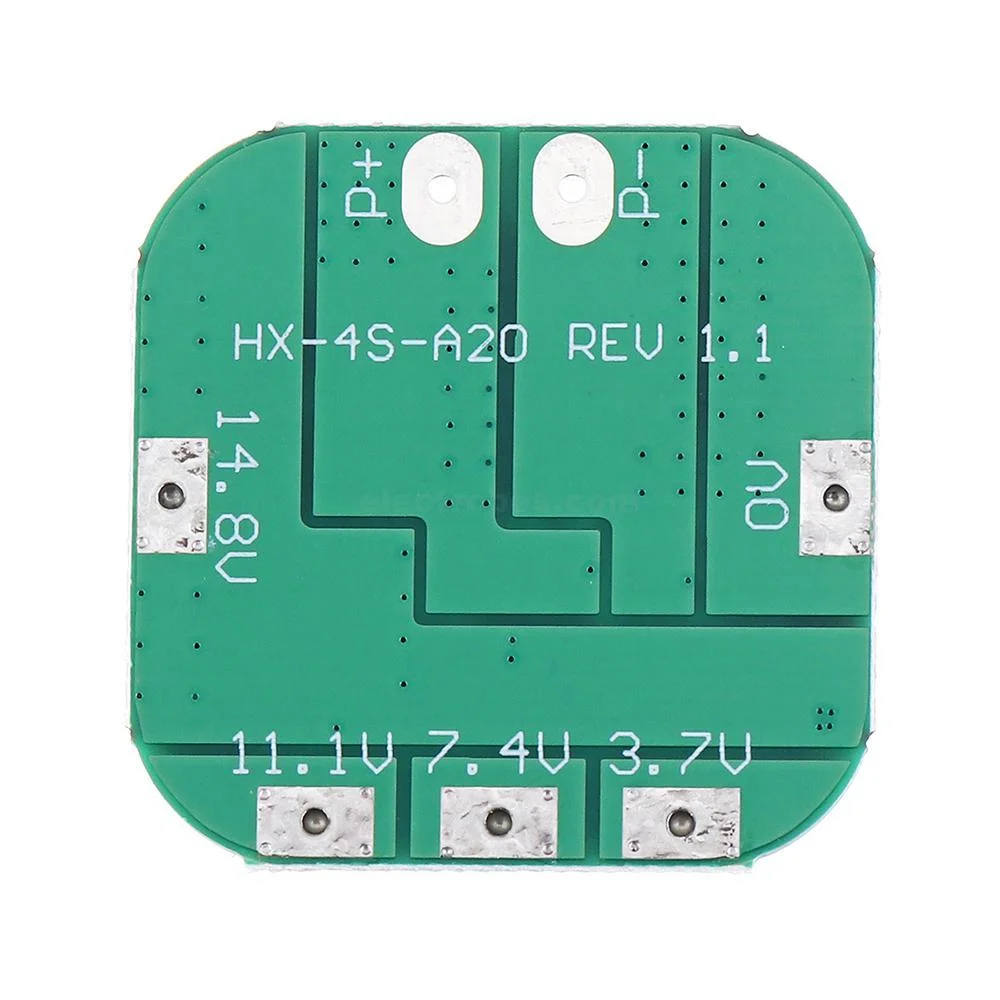
Correct wiring is essential for safe operation. The supplied wiring sequence is:
0V (B-) → 3.7V (B1) → 7.4V (B2) → 11.1V (B3) → 14.8V (B+)
The four series-connected cells should be connected according to the BMS wiring diagram and terminal markings.
Do not connect the wires incorrectly, as incorrect wiring can damage the protection circuit.
After connecting the battery pack, the board may require charging before the output becomes available.
Use Matched Li-Ion Cells
For reliable operation, use four cells or four parallel cell groups with similar:
- Voltage
- Capacity
- Internal resistance
- Age and condition
- Discharge capability
Do not combine good/new cells with weak, damaged or significantly aged cells. Uneven cells can cause poor battery performance and may trigger BMS protection prematurely.
Understanding the 20A Rating
Although this product is commonly listed as a 4S 20A BMS, the detailed supplied specification distinguishes between continuous and peak current:
| Current Specification | Rating |
|---|---|
| Maximum working current | 10A |
| Maximum instantaneous/peak current | 20A |
Therefore, 20A should not be treated as a guaranteed continuous operating current. For sustained loads, the 10A working-current specification should be considered, along with the capability of the actual battery cells and wiring.
C-Rating and Battery Current
The battery cells must be capable of supplying the required load current. For example, with a 2000mAh cell:
- 1C = 2Ah × 1 = 2A
- 3C = 2Ah × 3 = 6A
If the battery becomes excessively hot during operation, the cells may not be suitable for the applied load. Continued operation under excessive current can shorten battery life or damage the cells.
Specifications
| Specification | Details |
|---|---|
| Model | HX-4S-D20 |
| BMS Type | 4S Li-ion Battery Protection Board |
| Battery Type | Li-ion / Lithium-ion |
| Compatible Cells | 18650 and compatible Li-ion cells |
| Configuration | 4S |
| Nominal Pack Voltage | 14.4V–14.8V |
| Charging Voltage | 16.8V–17V |
| Overcharge Voltage | 4.25–4.35V ±0.05V |
| Over-discharge Voltage | 2.3–3.0V ±0.05V |
| Maximum Working Current | 10A |
| Maximum Peak Current | 20A |
| Static Current | <30µA |
| Short-Circuit Protection | Yes |
| Recovery | Charge recovery |
| Controller | S-8254AA |
| Internal Resistance | <100mΩ |
| Working Temperature | -40°C to +50°C |
| Storage Temperature | -40°C to +80°C |
| PCB Size | 35 × 35 × 3.6mm |
| Service Life | >50,000 hours |


Reviews
There are no reviews yet.