
Description
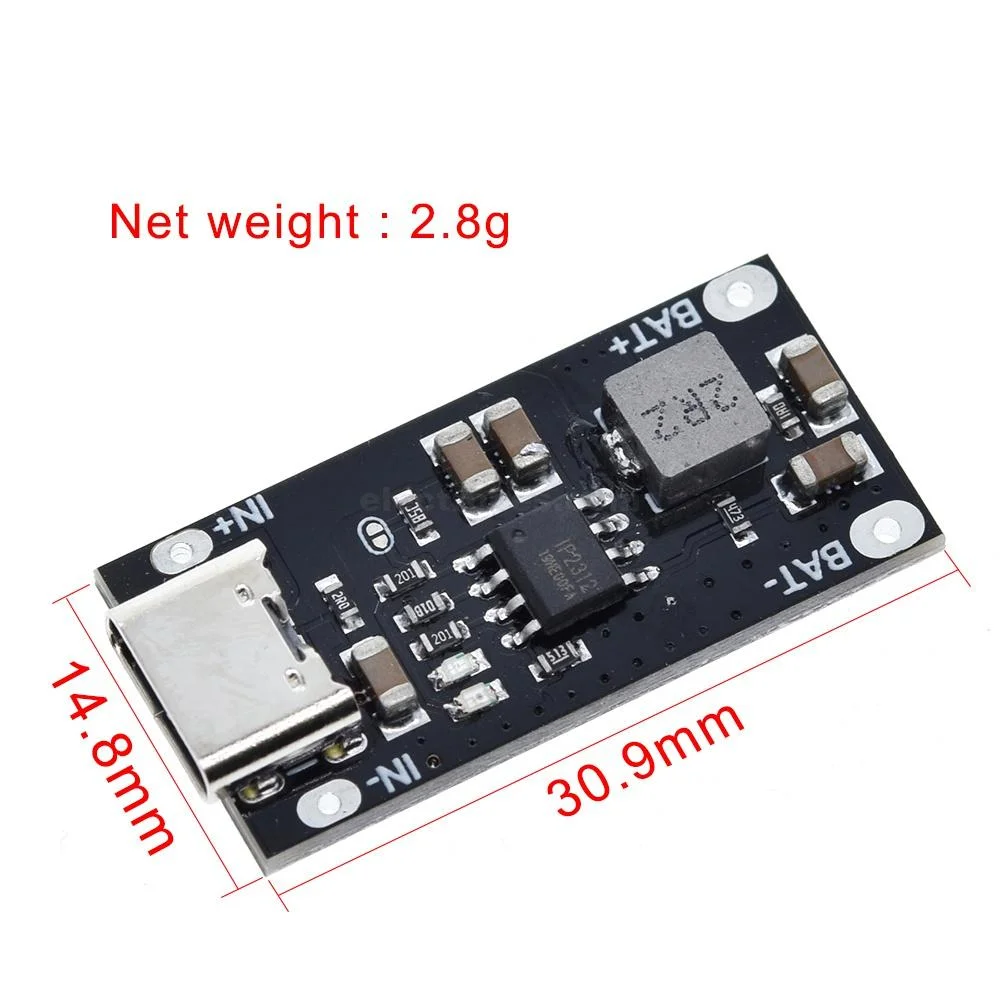
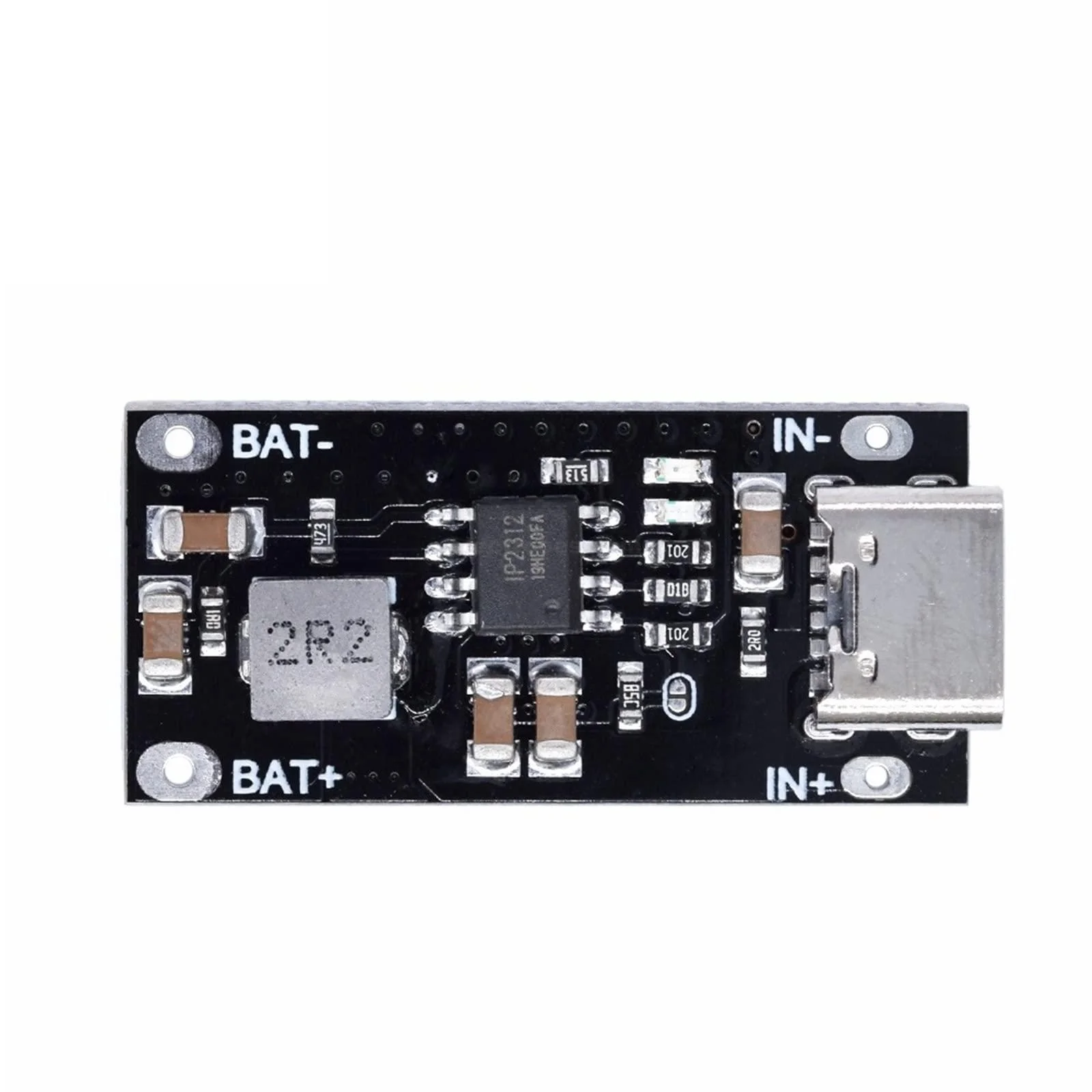
The USB Type-C 3A IP2312 Lithium Battery Charger Module is a compact and convenient charging board for compatible 3.7V lithium-ion, lithium-polymer, and ternary lithium batteries. It uses the IP2312 charging controller and accepts a 5V input through its USB Type-C connector.
With a charging current of up to 3A, this module provides a practical solution for DIY battery projects and electronic devices that require a compact lithium battery charging circuit.
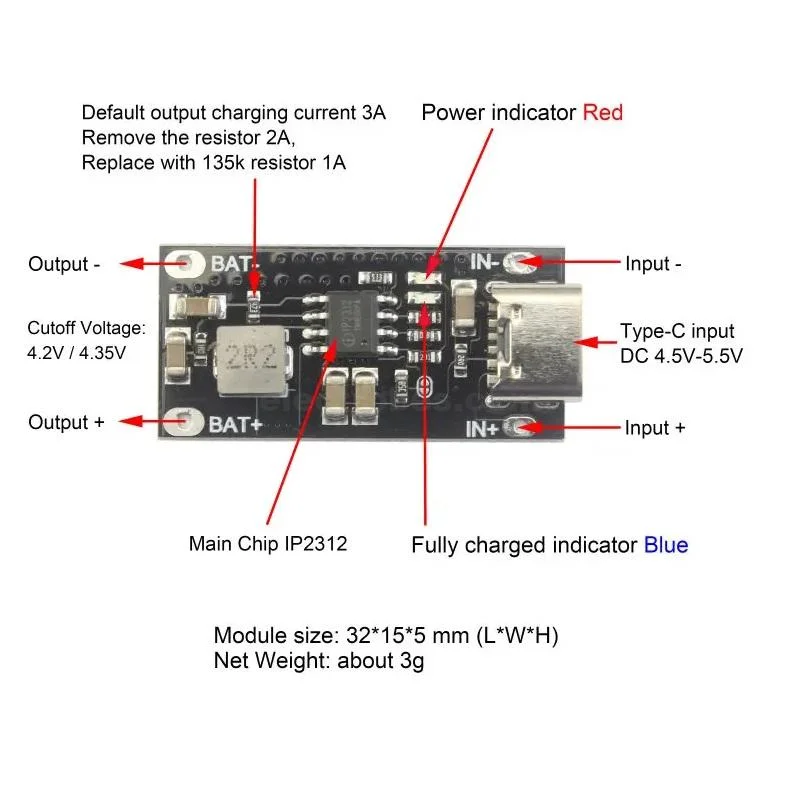
The charging current can be adjusted by changing the appropriate resistance on the board, making it useful for different battery capacities and project requirements.
Key Features
- IP2312 lithium battery charging controller
- USB Type-C input connector
- 5V charging input
- Input voltage range: 4.5V–5.5V
- Charging current up to 3A
- Adjustable charging current
- Available charging cut-off voltage options: 4.2V or 4.35V
- Charging status indicator LED
- Compact PCB design
- Suitable for DIY lithium battery charging projects
- Package includes one charging board
3A High-Current Charging
The module supports a charging current of up to 3A, providing faster charging compared with lower-current lithium battery charger boards when used with a suitable power source and compatible battery.
The actual charging current depends on the board configuration, battery, power supply, thermal conditions, and the resistance used to set the charging current.
USB Type-C Input
The built-in USB Type-C connector makes it easy to connect the charging module to a suitable 5V power source. The specified input voltage range is 4.5V to 5.5V.
This makes the module convenient for DIY electronics projects where a modern USB Type-C charging connection is preferred.
Selectable Charging Voltage
The IP2312 charger board is available with a 4.2V or 4.35V charging cut-off voltage, depending on the version of the module.
Make sure to select the correct version according to the battery chemistry and manufacturer’s recommended charging voltage. Using an incorrect charging voltage can damage a lithium battery.
Charging Indicator
An onboard indicator LED provides charging status information, making it easier to monitor the charging process during normal operation.
Applications
This IP2312 3A USB Type-C charger module can be useful for:
- DIY lithium battery packs
- Li-ion battery projects
- Li-polymer battery projects
- Portable electronics
- Rechargeable battery devices
- DIY power banks
- Embedded electronics projects
- Robotics projects
- IoT devices
- Custom battery-powered projects
Important Compatibility Warning
This module is not suitable for 3.2V LiFePO4 (lithium iron phosphate) batteries.
Before connecting a battery, verify its chemistry and required charging voltage. The 4.2V version and 4.35V version are intended for different battery requirements, so always use the correct version for your battery.
Specifications
| Specification | Details |
|---|---|
| Product Type | Lithium Battery Charger Module |
| Main Control Chip | IP2312 |
| Input Connector | USB Type-C |
| Input Voltage | 4.5V–5.5V |
| Recommended Input | 5V |
| Maximum Charging Current | 3A |
| Charging Current | Adjustable by resistance |
| Charging Cut-Off Voltage | 4.2V / 4.35V |
| Indicator | LED |
| Battery Type | Compatible Li-ion / Li-polymer / ternary lithium battery |
| LiFePO4 Support | No |
| Package Includes | 1 × Battery Charging Board |
| SKU | 1783 |
| Availability | In Stock |
| Price | ₨220 |
Reviews
There are no reviews yet.